“`html
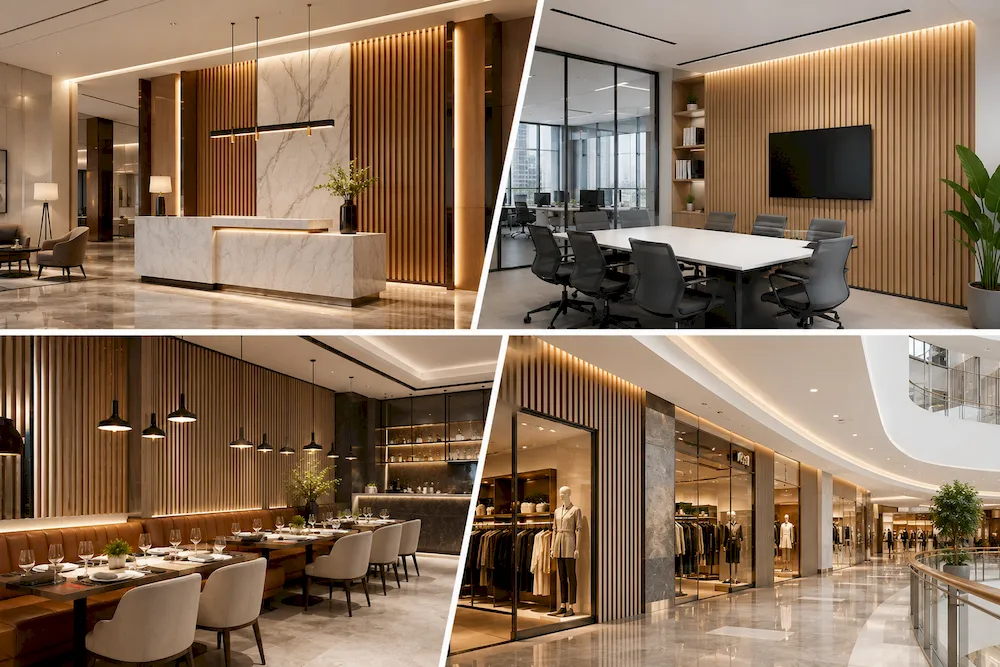
Decorative wall panels are used in hotels, offices, restaurants, and shopping malls. They cover walls, divide areas, support interior design, and help protect wall surfaces.
Different projects need different wall panel types. A hotel may need panels for guest rooms and corridors. An office may need panels for meeting rooms and reception areas. A restaurant may need wall materials that are easy to clean. A shopping mall may need panels for stores, public areas, and display spaces.
This article explains the wall panel trends used in these commercial spaces. It also covers material choices, surface designs, installation methods, and points buyers should check before ordering.
Why Decorative Wall Panels Are Used in Commercial Spaces
Commercial buildings often have large wall areas. Paint and wallpaper can cover these walls, but wall panels can also add structure, lines, texture, and different surface patterns.
Wall panels can be used to:
- Cover wall surfaces
- Create feature walls
- Divide one area from another
- Hide wall marks or cables
- Support lighting design
- Protect walls from contact
- Combine different materials
Many panel systems are made in set sizes and profiles. This helps contractors repeat the same design across rooms, floors, or building areas.
Trend 1: Slatted Wall Panels
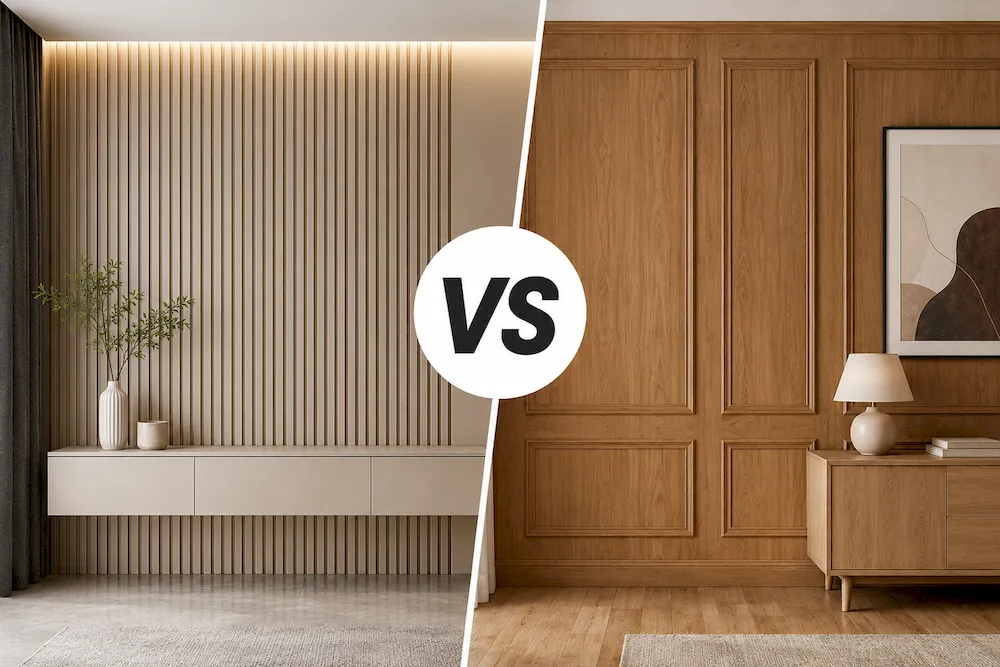
Slatted wall panels use vertical or horizontal lines. They are often made from WPC, MDF, wood, or acoustic material.
Vertical slats can make a wall appear taller. Horizontal slats can make a wall appear wider. The panel direction depends on the wall size and project plan.
Applications in Hotels
Hotels use slatted wall panels behind beds, televisions, reception desks, and seating areas. They can also be installed in corridors and meeting rooms.
Applications in Offices
In offices, slatted panels are often placed behind company signs, reception counters, meeting room screens, or work areas.
Applications in Restaurants and Malls
Restaurants use slatted panels around dining areas, counters, and entrances. Shopping malls use them in stores, display areas, and public seating zones.
Trend 2: Mixed Wall Materials
One wall does not need to use one material. Many projects combine wall panels with marble sheets, metal profiles, mirrors, lighting, or paint.
Common combinations include:
- WPC wall panels with PVC marble sheets
- Acoustic panels with metal trims
- Bamboo charcoal panels with lighting
- Wood grain panels with mirror strips
- Flat panels with slatted panels
This method helps divide the wall into sections. It can also mark different functions, such as reception, display, waiting, dining, or meeting areas.
Trend 3: PVC Marble Sheets
PVC marble sheets copy marble patterns through film, printing, or thermal transfer methods. They are often used where a project needs a marble look without using stone slabs.
These sheets can be used on walls in hotel lobbies, restaurants, office reception areas, shopping mall stores, and display walls.
Common Uses
- Reception walls
- Television walls
- Lift halls
- Restaurant counters
- Shop display walls
- Meeting room walls
PVC marble sheets can be installed with wall panels and metal profiles. Buyers should check the sheet size, thickness, surface type, pattern code, and installation method.
Trend 4: Acoustic Wall Panels
Acoustic wall panels are used to reduce sound reflection inside a room. They often use MDF slats fixed on a polyester fiber panel.
These panels are used in places where speech, music, or room noise needs control.
Hotel Applications
Hotels may use acoustic panels in meeting rooms, conference rooms, restaurants, guest areas, and event halls.
Office Applications
Offices use them in meeting rooms, call areas, workspaces, training rooms, and video rooms.
Restaurant and Mall Applications
Restaurants may use acoustic panels to reduce sound reflection from people, music, and table activity. Shopping malls may use them in cinemas, event rooms, children’s areas, and food spaces.
Before ordering, buyers should check the panel size, slat spacing, base material, surface finish, and acoustic test data.
Trend 5: Large Wall Panels
Large wall panels cover more wall area with fewer joints. PVC marble sheets and bamboo charcoal wall panels are often supplied in large sizes.
Large panels can be used in lobbies, corridors, meeting rooms, retail stores, and restaurant walls.
They can reduce the number of visible connections, but they also require planning for transport, lifting, cutting, and installation.
Trend 6: Wood Grain Surfaces
Wood grain remains common in hotels, offices, restaurants, and malls. The pattern can be applied to WPC wall panels, bamboo charcoal panels, MDF panels, and flexible wall panels.
Wood grain surfaces are used in areas such as:
- Hotel guest rooms
- Office reception areas
- Restaurant dining spaces
- Shop interiors
- Meeting rooms
- Corridors
Buyers should confirm the grain direction, color code, surface film, and batch before production. Panels from different batches may have color differences.
Trend 7: Flexible Wall Panels
Flexible wall panels can be used on columns, curved walls, rounded corners, and other surfaces that are not flat.
They often use MDF, HDF, wood, veneer, paper, or PVC surfaces. The panel structure allows it to bend around a shape.
Where Flexible Panels Are Used
- Hotel columns
- Restaurant counters
- Office entrance areas
- Shopping mall pillars
- Retail display structures
- Curved feature walls
The installer should check the bending direction, panel thickness, surface material, and minimum curve size before installation.
Trend 8: Metal Profiles and Trim Lines
Metal profiles are used between panels, around corners, and along panel edges. They can be made from aluminum or steel and may have black, gold, silver, or other finishes.
Profiles can help:
- Cover panel joints
- Finish corners
- Create lines between materials
- Protect panel edges
- Support wall layout
Metal profiles are often used with PVC marble sheets, bamboo charcoal panels, WPC wall panels, and flat wall panels.
Trend 9: Wall Panels with Lighting
Lighting can be installed above, below, or between wall panels. LED strips are often used with slatted panels, metal profiles, marble sheets, and wall niches.
Lighting helps mark the panel lines and separate wall sections. It can also support signs, displays, and reception areas.
The lighting position should be planned before panel installation. Cables, transformers, access points, and repair space should be considered.
Wall Panel Trends for Hotels
Hotel wall panel projects often focus on repeated room designs, corridor walls, lobby areas, and meeting spaces.
Common choices include:
- WPC slatted panels behind beds and televisions
- PVC marble sheets in lobbies and lift halls
- Acoustic panels in meeting rooms
- Bamboo charcoal panels in corridors
- Metal trims between wall materials
Hotels should also consider cleaning, fire reports, installation time, replacement, and color control.
Wall Panel Trends for Offices
Office wall panels are often used in reception areas, meeting rooms, corridors, workspaces, and company display walls.
WPC panels can create slatted backgrounds. Acoustic panels can help control sound. Marble sheets can be used behind reception counters. Metal lines can connect different wall sections.
Office buyers should consider cable access, company signs, lighting, maintenance, and future layout changes.
Wall Panel Trends for Restaurants
Restaurants need wall materials for dining areas, counters, entrances, private rooms, and corridors.
Wall panels should be selected based on cleaning needs, food area rules, moisture, fire requirements, and daily contact.
Common materials include WPC wall panels, PVC marble sheets, acoustic panels, flexible wall panels, and metal trims.
Wall Panel Trends for Shopping Malls
Shopping malls contain stores, corridors, food areas, cinemas, display zones, and public spaces. Each area may need a different wall material.
Retail stores often use wall panels for product display and brand signs. Food areas may need surfaces that can be cleaned. Cinemas and event rooms may use acoustic panels. Public areas may use large wall panels and metal profiles.
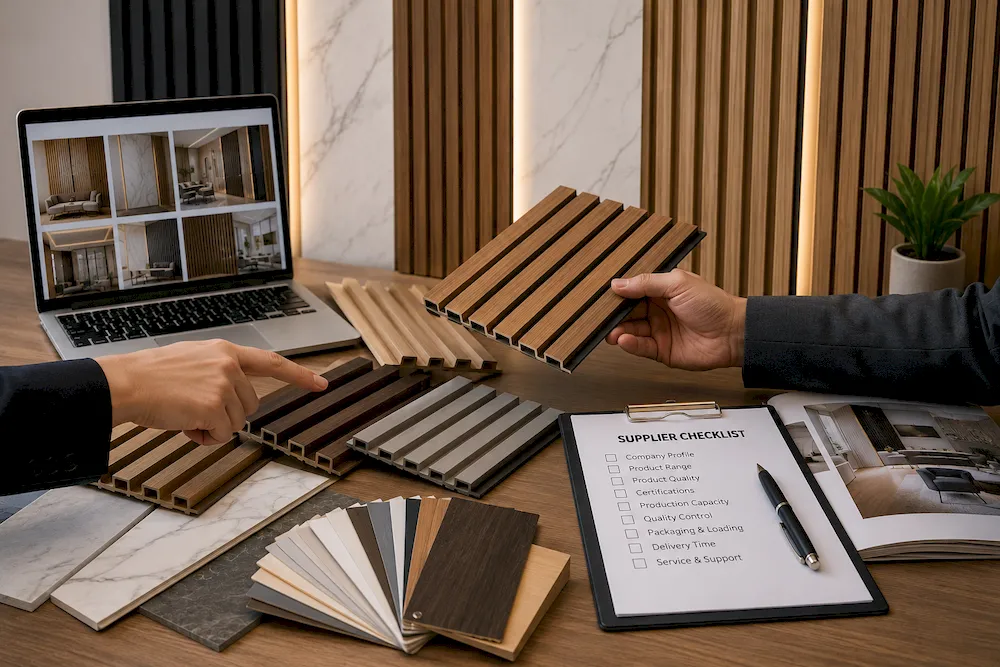
What Buyers Should Check Before Ordering
Before placing an order, buyers should check:
- Panel material
- Panel size and thickness
- Surface code
- Color batch
- Installation method
- Accessories
- Corner treatment
- Fire test reports
- Acoustic data when required
- Packaging method
- Production time
- Replacement needs
Samples and profile drawings should be checked before production. For project orders, the buyer should keep one approved sample for color and surface control.
Conclusion
Decorative wall panel trends for hotels, offices, restaurants, and shopping malls include slatted panels, mixed materials, marble sheets, acoustic panels, flexible panels, wood grain surfaces, metal trims, and lighting.
Each project has different needs. The right wall panel depends on the building area, wall size, installation method, cleaning plan, sound control, fire rules, and budget.
Buyers should compare materials, sizes, surfaces, accessories, test reports, and samples before placing an order.
“`