“`html
Wall panels are used to cover walls and change the look of an interior space. Two common choices are WPC wall panels and traditional wood panels. Both can be used in homes, hotels, offices, shops, restaurants, and other buildings.
WPC means wood plastic composite. WPC wall panels are made from wood powder, plastic, and other materials. Traditional wood panels are made from natural wood, plywood, MDF, or wood veneer.
These two types of wall panels have differences in material, installation, cleaning, maintenance, cost, and use. This guide compares WPC wall panels with traditional wood panels to help buyers choose a material for an interior decoration project.
What Are WPC Wall Panels?
WPC wall panels are made by mixing wood powder with plastic material. The mixture is heated and passed through a mould. The mould forms the panel into a fixed shape.
After production, the panel may receive a surface film, printed layer, coating, or wood grain pattern. WPC wall panels are available in flat, slatted, fluted, curved, and wave profiles.
Many WPC wall panels use an interlocking edge. One panel connects with the next panel during installation. The panels may be fixed with glue, nails, screws, or clips.
What Are Traditional Wood Panels?
Traditional wood panels are made from wood or wood-based boards. They may use solid wood, plywood, MDF, veneer, or other wood products.
Wood panels can be cut into boards, strips, slats, or other shapes. The surface may be painted, stained, polished, laminated, or covered with veneer.
Some wood panels are supplied with a finished surface. Other panels need surface work after installation, such as sanding, painting, or sealing.
Material Comparison
WPC Wall Panel Material
WPC panels contain wood powder and plastic. The amount and type of each material can differ between suppliers and product lines.
The panel structure is formed by extrusion. This process allows the factory to produce the same profile in large quantities.
Traditional Wood Panel Material
Traditional wood panels use natural wood or wood-based materials. The grain, color, and surface can vary from one board to another.
Solid wood comes from trees. Plywood is made from layers of wood veneer. MDF is made from wood fibers and resin. Veneer panels use a thin layer of wood on another base material.
Appearance and Design Options
WPC Wall Panels
WPC wall panels can copy the look of wood through surface film or printing. Buyers can choose from different colors, grain patterns, and profiles.
Common WPC wall panel designs include:
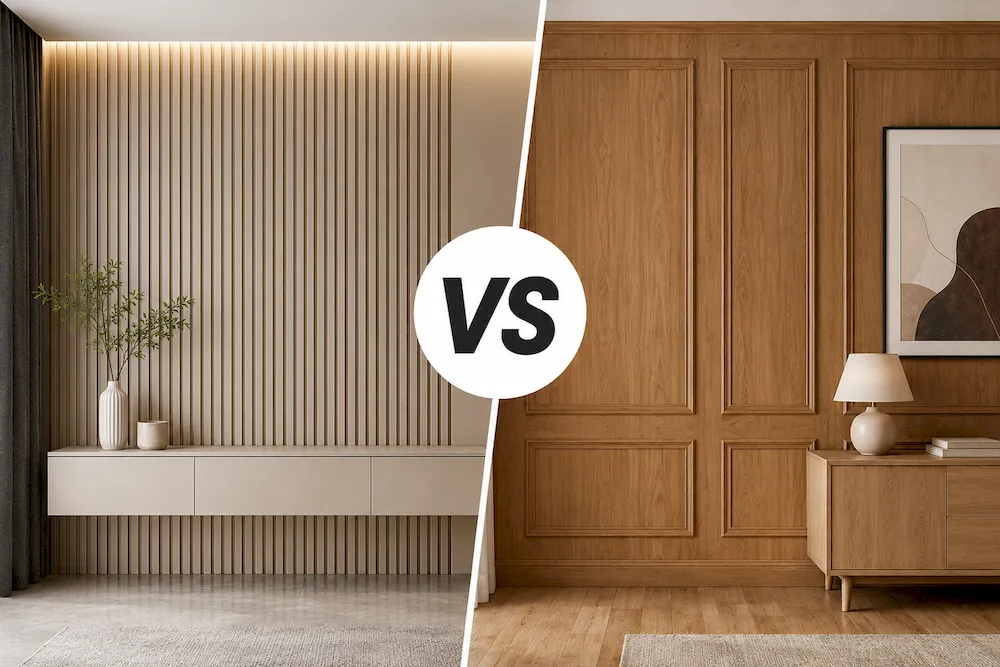
- Vertical slat panels
- Fluted panels
- Flat panels
- Wave panels
- Half-covered panels
- Wood grain panels
Because the surface is made during production, panels from the same production batch can have the same pattern and color.
Traditional Wood Panels
Wood panels show wood grain from the material itself or from a veneer layer. Each wood board may have a different grain pattern.
Wood panels can also be painted or stained. The final result depends on the wood type, surface process, installation work, and coating.
Installation Comparison
Installing WPC Wall Panels
WPC wall panels can often be cut and installed on site. Many types use an interlocking structure, which helps connect one panel to another.
Installation may require:
- Measuring tape
- Saw
- Glue
- Nail gun
- Screws
- Clips
- Corner trims
Some WPC panels can be installed directly on a wall. Others may need wooden battens or a metal frame.
Installing Traditional Wood Panels
Wood panel installation may require cutting, sanding, drilling, fixing, filling, staining, painting, or sealing.
The process depends on whether the product is solid wood, plywood, MDF, or veneer. Some wood panels need more surface work after installation.
Wood can also change size when room moisture changes. Installers may need to leave expansion gaps between panels.
Cleaning and Maintenance
WPC Wall Panels
WPC wall panels can usually be cleaned with a cloth. Dust and marks can often be removed with water or a cleaning product.
The surface does not usually need painting or sealing after installation. If one panel is damaged, it may be possible to remove and replace that panel.
Traditional Wood Panels
Wood panels may need surface care over time. Painted wood may need new paint. Stained wood may need another coating. Scratches may require sanding or repair.
Water should not remain on many wood surfaces for a long time. Moisture can cause swelling, bending, stains, or surface damage.
Moisture and Water
WPC wall panels contain plastic, so they do not react to moisture in the same way as many wood products. However, buyers should still confirm whether a product is suitable for the planned area.
Traditional wood panels can absorb moisture. Solid wood, MDF, and plywood may change when exposed to water or room moisture.
For kitchens, bathrooms, shops, and other areas where wall cleaning is common, buyers should check the water resistance of the selected product before ordering.
Fire and Building Requirements
WPC wall panels and traditional wood panels can have different fire performance. The result depends on the material, formula, coating, thickness, and production process.
Public buildings, hotels, schools, offices, and shopping malls may have rules for wall materials. Buyers should request test reports and check local building requirements.
A product should not be selected only because it is called WPC or wood. The test result for the exact product should be checked.
Cost Comparison
Product Cost
The product price depends on the material, size, thickness, surface, order quantity, and supplier.
Solid wood panels may cost more than some WPC panels. MDF or plywood panels may cost less, but they may need paint, veneer, or other surface work.
Installation Cost
WPC wall panels may reduce some installation steps because the surface is already finished. Interlocking edges can also help with panel connection.
Traditional wood panels may need sanding, painting, staining, sealing, or filling after installation. These steps can add labor and material costs.
Maintenance Cost
Buyers should also consider future cleaning and repair. A lower purchase price does not always mean a lower project cost.
The total cost may include:
- Panel price
- Shipping cost
- Accessories
- Installation labor
- Surface treatment
- Cleaning
- Repair
- Replacement
Applications of WPC and Wood Panels
WPC Wall Panel Applications
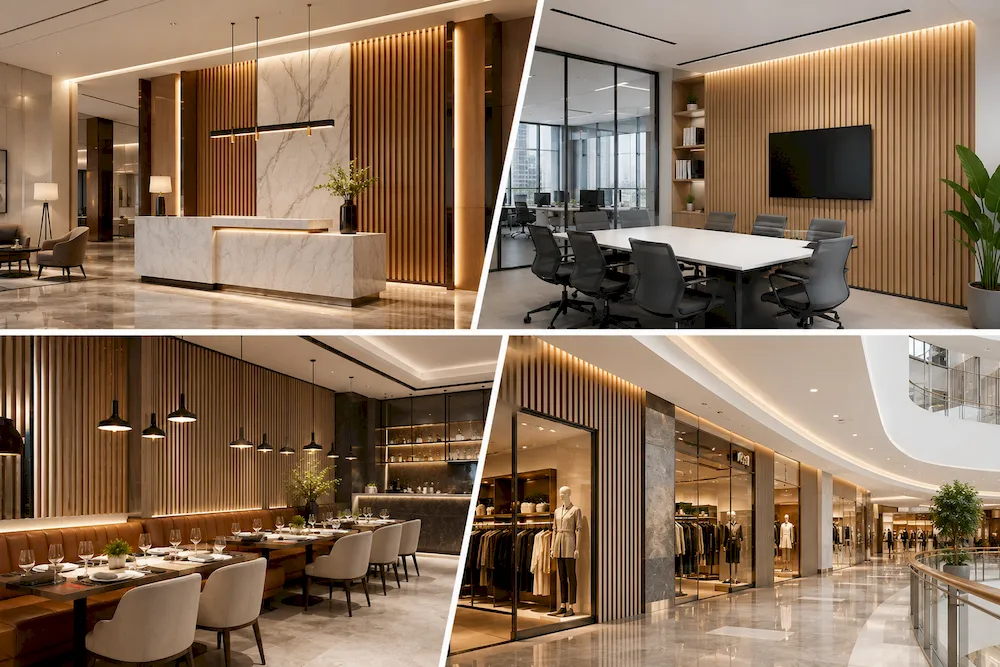
WPC wall panels are often used in:
- Living rooms
- Bedrooms
- Hotel rooms
- Office reception areas
- Meeting rooms
- Restaurants
- Shops
- Exhibition spaces
They are often used behind televisions, beds, reception desks, company signs, and display areas.
Traditional Wood Panel Applications
Traditional wood panels are used in homes, hotels, offices, libraries, restaurants, meeting rooms, and furniture areas.
Wood panels may be selected when the project requires natural wood grain or a specific wood material.
Which Material Is Better?
There is no single answer for every project. The choice depends on the wall location, budget, installation method, surface requirement, cleaning plan, and building rules.
Choose WPC Wall Panels When:
- The project needs a finished surface
- The buyer wants an interlocking panel system
- The wall needs regular cleaning
- The project needs the same color across many panels
- The buyer wants to reduce painting work
- The project uses fluted or slatted wall profiles
Choose Traditional Wood Panels When:
- The project requires natural wood
- The wood grain must come from the material
- The panel will be stained or painted on site
- The design requires a type of solid wood or veneer
- The project allows regular surface maintenance
What Buyers Should Check Before Ordering
Before buying WPC or traditional wood panels, check the following points:
- Panel material
- Panel size
- Thickness
- Wall coverage width
- Surface type
- Color code
- Installation method
- Required accessories
- Fire test reports
- Packaging method
- Minimum order quantity
- Production time
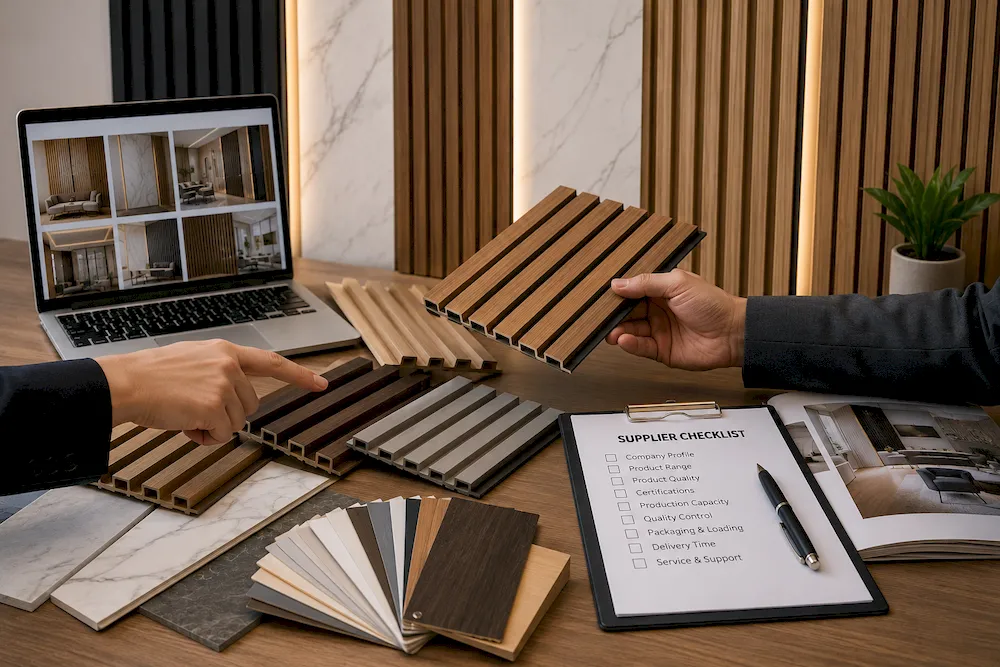
Buyers should request samples before placing a project order. Samples help check the surface, profile, color, joining method, and cutting process.
Conclusion
WPC wall panels and traditional wood panels can both be used for interior wall decoration. WPC panels are made from wood powder and plastic, while traditional panels use natural wood or wood-based boards.
WPC panels often require fewer surface steps and can be cleaned with a cloth. Traditional wood panels provide wood grain from wood or veneer but may need more surface care.
The right choice depends on the project. Buyers should compare material, installation, cleaning, cost, test reports, and local building rules before placing an order.
“`