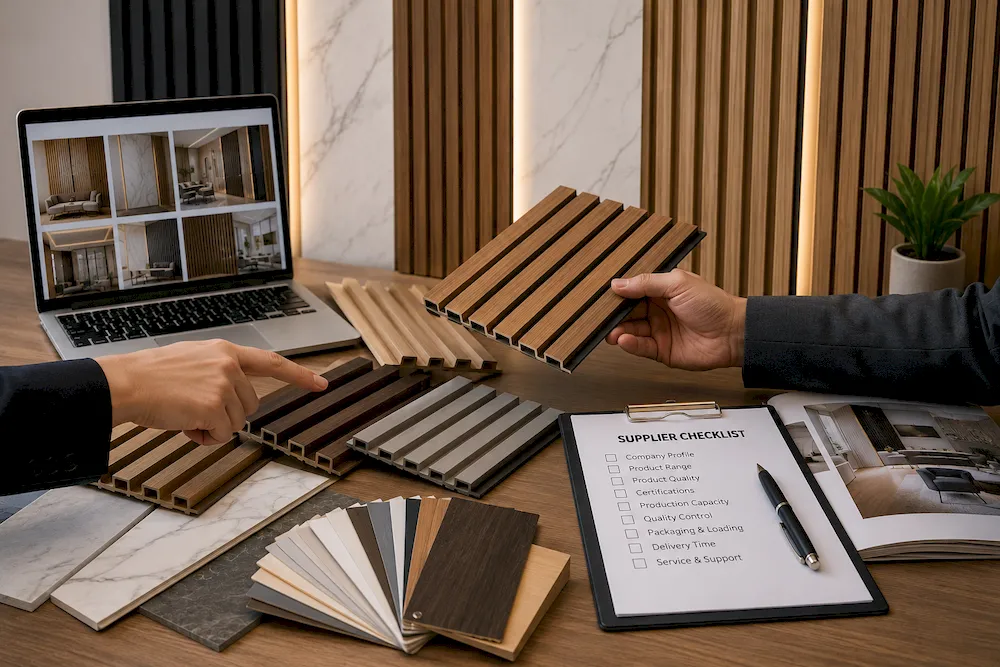
How to Choose a Reliable Decorative Wall Panel Supplier in China

Choosing a decorative wall panel supplier in China is an important step for importers, distributors, contractors, and project companies. The supplier affects product quality, delivery time, packaging, communication, and project cost.

China has many suppliers of WPC wall panels, acoustic wall panels, PVC marble sheets, bamboo charcoal wall panels, flexible wall panels, ceiling panels, and wall accessories. However, their products, services, and production systems are not the same.

Buyers should not choose a supplier based only on price. They should check the company, products, samples, test reports, production process, packaging, and export experience before placing an order.

This guide explains how to choose a decorative wall panel supplier in China and what questions buyers should ask during the purchasing process.

Define Your Product Requirements First

Before contacting a supplier, prepare a list of product requirements. This helps the supplier understand the project and provide the correct information.

Your requirements may include:

  • Product type
  • Panel size
  • Panel thickness
  • Surface color
  • Surface pattern
  • Required quantity
  • Application area
  • Installation method
  • Required accessories
  • Destination country

For example, a hotel project may need WPC wall panels for guest rooms, acoustic panels for meeting rooms, and PVC marble sheets for the lobby. A supplier needs this information before recommending products.

Check the Supplier’s Product Range

A decorative material supplier may offer one product or several product groups. Check whether the supplier can provide the materials required for your project.

Common decorative wall products include:

  • WPC wall panels
  • Flat WPC panels
  • WPC timber tubes
  • WPC ceiling panels
  • Acoustic wall panels
  • Flexible wall panels
  • PVC marble sheets
  • Bamboo charcoal wall panels
  • Metal profiles
  • Corner lines and trims

Buying several product types from one supplier may make communication, color matching, packaging, and shipping easier. However, buyers should still check each product separately.

Ask for Product Specifications

Do not select a wall panel from pictures only. Ask the supplier for product specifications and profile drawings.

Information to Request

  • Product material
  • Panel width
  • Panel length
  • Panel thickness
  • Wall coverage width
  • Panel weight
  • Surface material
  • Available colors
  • Connection structure
  • Installation accessories

The profile drawing is important for WPC wall panels. It shows the shape, grooves, connection edges, and panel coverage width.

For acoustic wall panels, ask about the MDF slats, polyester fiber base, panel size, slat spacing, and thickness.

For PVC marble sheets and bamboo charcoal panels, ask about sheet size, thickness, density, surface film, and edge treatment.

Request Samples Before Ordering

A product sample helps the buyer check the material before placing an order. Photos and videos cannot show every detail.

A sample can be used to check:

  • Color
  • Surface pattern
  • Panel structure
  • Thickness
  • Weight
  • Panel connection
  • Cutting method
  • Installation method

For a project order, keep one approved sample. The buyer and supplier can use this sample as a reference during production and inspection.

Make sure the sample code, color code, panel size, and surface type are written in the order documents.

Check Test Reports and Certifications

Wall panels may need test reports for different markets and projects. The required documents depend on the product, destination country, and building type.

Buyers may ask for:

  • Fire test reports
  • Heavy metal test reports
  • Material emission reports
  • CE documents
  • SGS test reports
  • Quality management certificates

Check whether the test report applies to the product you plan to buy. A report for one product may not apply to another product with a different material, thickness, or surface.

Buyers should also check local building rules before ordering materials for hotels, offices, restaurants, schools, and shopping malls.

Learn About the Supplier’s Experience

Ask how long the supplier has worked with decorative wall materials. Experience can help with product selection, installation questions, packing, shipping, and export documents.

Also ask which countries or regions the supplier has exported to. A supplier with export experience may understand container loading, customs documents, labels, and packaging requirements.

Questions About Experience

  • How many years have you supplied wall panels?
  • Which products do you produce or supply?
  • Which markets do you export to?
  • Have you worked with distributors or project companies?
  • Can you provide project or loading photos?
  • Can you provide installation guidance?

Check Production and Quality Control

Ask the supplier how the products are made and checked. The quality control process should cover raw materials, panel size, surface, color, packing, and loading.

Common Inspection Points

  • Panel length and width
  • Panel thickness
  • Surface condition
  • Color consistency
  • Profile shape
  • Interlocking edges
  • Product quantity
  • Package condition

For large orders, buyers can ask for inspection photos and videos before shipment. A third-party inspection company can also check the goods when required.

The approved sample and purchase order should be used during inspection.

Compare Prices in the Correct Way

A lower unit price does not always mean a lower total cost. Buyers should compare quotations based on the same product specifications.

Check whether each quotation includes:

  • The same material
  • The same panel size
  • The same thickness
  • The same surface film
  • The same accessories
  • The same packaging
  • The same trade terms

Also check whether the price is based on EXW, FOB, CIF, or another trade term. Shipping, local charges, customs duties, and delivery costs may not be included.

Ask About the Minimum Order Quantity

Different wall panel products may have different minimum order quantities. A standard color may have a lower minimum quantity than a custom color.

Ask whether different models or colors can be combined in one container. This can help distributors test several products in one shipment.

For custom products, confirm whether there are extra costs for moulds, films, packaging, labels, or samples.

Check Packaging and Container Loading

Wall panels can be damaged by pressure, movement, water, or impact during transport. Packaging should match the product type and shipping method.

Ask the supplier to provide:

  • Package size
  • Panels per package
  • Package weight
  • Protective materials
  • Pallet information
  • Container loading quantity
  • Loading photos

Long WPC wall panels need support during transport. PVC marble sheets and bamboo charcoal panels need edge and surface protection. Metal profiles should be packed to prevent scratches and bending.

Review Communication and Response Time

Communication is part of the purchasing process. The supplier should answer questions about specifications, prices, samples, production, and shipping.

Check whether the supplier provides clear answers. Product codes, sizes, colors, quantities, and delivery dates should be confirmed in writing.

Avoid relying only on voice messages. Keep important product and order information in emails, quotations, invoices, or contracts.

Confirm Production and Delivery Time

Ask for the production time before paying a deposit. Production time may depend on the product type, quantity, color, and material supply.

The full delivery schedule may include:

  • Sample confirmation
  • Deposit payment
  • Material preparation
  • Production
  • Inspection
  • Packaging
  • Container booking
  • Loading
  • Sea or land transport

Leave time for inspection and shipping changes, especially for construction and hotel projects with fixed installation dates.

Confirm Payment Terms

Payment terms should be written in the quotation or sales contract. Common terms include a deposit before production and the balance before shipment.

Before sending payment, check the company name, bank account, invoice, product details, and payment terms.

Do not send payment to a changed bank account without confirming the change through another communication channel.

Check After-Sales Support

Ask how the supplier handles product questions, installation support, damaged goods, missing items, or quality problems.

A supplier may provide:

  • Installation drawings
  • Installation videos
  • Accessory lists
  • Product replacement support
  • Online technical communication

Buyers should inspect the products after arrival and report any problem with photos, videos, package numbers, and product codes.

Questions to Ask a Wall Panel Supplier

Before choosing a supplier, ask these questions:

  • What wall panel products do you supply?
  • Can you provide product samples?
  • What are the product specifications?
  • Can the size or color be customized?
  • What test reports are available?
  • What is the minimum order quantity?
  • What accessories are required?
  • How are the products inspected?
  • How are the products packed?
  • How many panels fit in one container?
  • What is the production time?
  • What are the payment terms?
  • Can you provide installation guidance?

Work with WITOPROX

WITOPROX is located in Linyi, Shandong, China, and has more than seven years of experience in decorative materials.

The company supplies WPC wall panels, acoustic wall panels, flexible wall panels, PVC marble sheets, bamboo charcoal wall panels, WPC ceiling products, timber tubes, and related profiles.

Products are supplied to markets in Southeast Asia, the Middle East, South America, Africa, and Europe. Buyers can contact WITOPROX to request product information, specifications, samples, and quotations.

Conclusion

Choosing a decorative wall panel supplier in China requires more than comparing prices. Buyers should check the product range, specifications, samples, test reports, experience, quality control, packaging, communication, and delivery time.

Prepare your project requirements before contacting suppliers. Request samples and written product details before placing an order. Confirm all sizes, colors, quantities, accessories, packaging, and payment terms in the purchase documents.

These steps can help reduce purchasing problems and make the order process easier to manage.

“`
Decorative Wall Panel Trends for Hotels, Offices, Restaurants and Shopping Malls

“`html

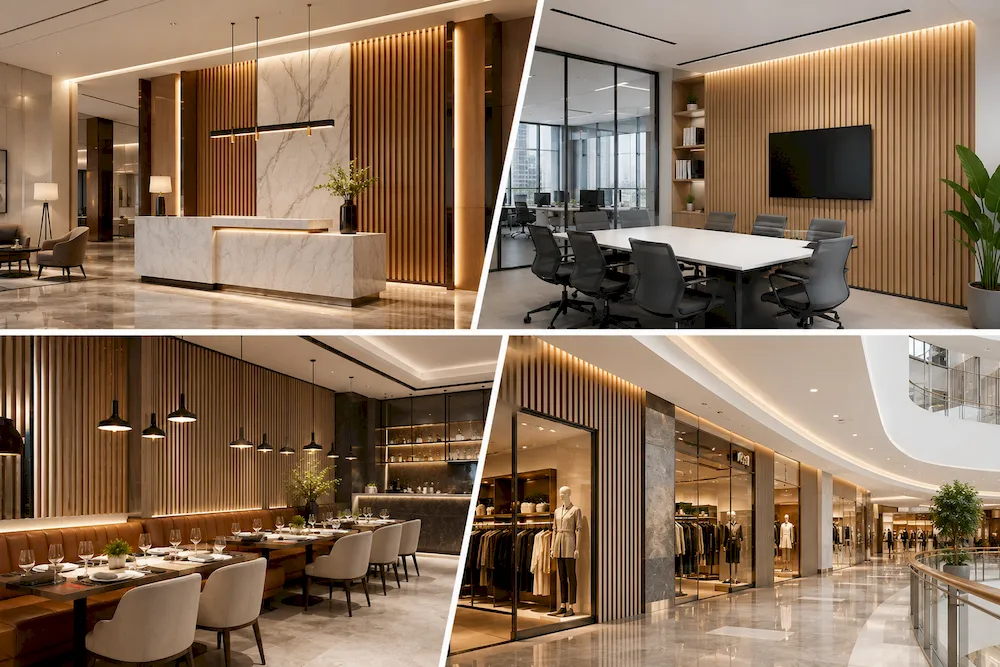
Decorative wall panels are used in hotels, offices, restaurants, and shopping malls. They cover walls, divide areas, support interior design, and help protect wall surfaces.

Different projects need different wall panel types. A hotel may need panels for guest rooms and corridors. An office may need panels for meeting rooms and reception areas. A restaurant may need wall materials that are easy to clean. A shopping mall may need panels for stores, public areas, and display spaces.

This article explains the wall panel trends used in these commercial spaces. It also covers material choices, surface designs, installation methods, and points buyers should check before ordering.

Why Decorative Wall Panels Are Used in Commercial Spaces

Commercial buildings often have large wall areas. Paint and wallpaper can cover these walls, but wall panels can also add structure, lines, texture, and different surface patterns.

Wall panels can be used to:

  • Cover wall surfaces
  • Create feature walls
  • Divide one area from another
  • Hide wall marks or cables
  • Support lighting design
  • Protect walls from contact
  • Combine different materials

Many panel systems are made in set sizes and profiles. This helps contractors repeat the same design across rooms, floors, or building areas.

Trend 1: Slatted Wall Panels

Slatted wall panels use vertical or horizontal lines. They are often made from WPC, MDF, wood, or acoustic material.

Vertical slats can make a wall appear taller. Horizontal slats can make a wall appear wider. The panel direction depends on the wall size and project plan.

Applications in Hotels

Hotels use slatted wall panels behind beds, televisions, reception desks, and seating areas. They can also be installed in corridors and meeting rooms.

Applications in Offices

In offices, slatted panels are often placed behind company signs, reception counters, meeting room screens, or work areas.

Applications in Restaurants and Malls

Restaurants use slatted panels around dining areas, counters, and entrances. Shopping malls use them in stores, display areas, and public seating zones.

Trend 2: Mixed Wall Materials

One wall does not need to use one material. Many projects combine wall panels with marble sheets, metal profiles, mirrors, lighting, or paint.

Common combinations include:

  • WPC wall panels with PVC marble sheets
  • Acoustic panels with metal trims
  • Bamboo charcoal panels with lighting
  • Wood grain panels with mirror strips
  • Flat panels with slatted panels

This method helps divide the wall into sections. It can also mark different functions, such as reception, display, waiting, dining, or meeting areas.

Trend 3: PVC Marble Sheets

PVC marble sheets copy marble patterns through film, printing, or thermal transfer methods. They are often used where a project needs a marble look without using stone slabs.

These sheets can be used on walls in hotel lobbies, restaurants, office reception areas, shopping mall stores, and display walls.

Common Uses

  • Reception walls
  • Television walls
  • Lift halls
  • Restaurant counters
  • Shop display walls
  • Meeting room walls

PVC marble sheets can be installed with wall panels and metal profiles. Buyers should check the sheet size, thickness, surface type, pattern code, and installation method.

Trend 4: Acoustic Wall Panels

Acoustic wall panels are used to reduce sound reflection inside a room. They often use MDF slats fixed on a polyester fiber panel.

These panels are used in places where speech, music, or room noise needs control.

Hotel Applications

Hotels may use acoustic panels in meeting rooms, conference rooms, restaurants, guest areas, and event halls.

Office Applications

Offices use them in meeting rooms, call areas, workspaces, training rooms, and video rooms.

Restaurant and Mall Applications

Restaurants may use acoustic panels to reduce sound reflection from people, music, and table activity. Shopping malls may use them in cinemas, event rooms, children’s areas, and food spaces.

Before ordering, buyers should check the panel size, slat spacing, base material, surface finish, and acoustic test data.

Trend 5: Large Wall Panels

Large wall panels cover more wall area with fewer joints. PVC marble sheets and bamboo charcoal wall panels are often supplied in large sizes.

Large panels can be used in lobbies, corridors, meeting rooms, retail stores, and restaurant walls.

They can reduce the number of visible connections, but they also require planning for transport, lifting, cutting, and installation.

Trend 6: Wood Grain Surfaces

Wood grain remains common in hotels, offices, restaurants, and malls. The pattern can be applied to WPC wall panels, bamboo charcoal panels, MDF panels, and flexible wall panels.

Wood grain surfaces are used in areas such as:

  • Hotel guest rooms
  • Office reception areas
  • Restaurant dining spaces
  • Shop interiors
  • Meeting rooms
  • Corridors

Buyers should confirm the grain direction, color code, surface film, and batch before production. Panels from different batches may have color differences.

Trend 7: Flexible Wall Panels

Flexible wall panels can be used on columns, curved walls, rounded corners, and other surfaces that are not flat.

They often use MDF, HDF, wood, veneer, paper, or PVC surfaces. The panel structure allows it to bend around a shape.

Where Flexible Panels Are Used

  • Hotel columns
  • Restaurant counters
  • Office entrance areas
  • Shopping mall pillars
  • Retail display structures
  • Curved feature walls

The installer should check the bending direction, panel thickness, surface material, and minimum curve size before installation.

Trend 8: Metal Profiles and Trim Lines

Metal profiles are used between panels, around corners, and along panel edges. They can be made from aluminum or steel and may have black, gold, silver, or other finishes.

Profiles can help:

  • Cover panel joints
  • Finish corners
  • Create lines between materials
  • Protect panel edges
  • Support wall layout

Metal profiles are often used with PVC marble sheets, bamboo charcoal panels, WPC wall panels, and flat wall panels.

Trend 9: Wall Panels with Lighting

Lighting can be installed above, below, or between wall panels. LED strips are often used with slatted panels, metal profiles, marble sheets, and wall niches.

Lighting helps mark the panel lines and separate wall sections. It can also support signs, displays, and reception areas.

The lighting position should be planned before panel installation. Cables, transformers, access points, and repair space should be considered.

Wall Panel Trends for Hotels

Hotel wall panel projects often focus on repeated room designs, corridor walls, lobby areas, and meeting spaces.

Common choices include:

  • WPC slatted panels behind beds and televisions
  • PVC marble sheets in lobbies and lift halls
  • Acoustic panels in meeting rooms
  • Bamboo charcoal panels in corridors
  • Metal trims between wall materials

Hotels should also consider cleaning, fire reports, installation time, replacement, and color control.

Wall Panel Trends for Offices

Office wall panels are often used in reception areas, meeting rooms, corridors, workspaces, and company display walls.

WPC panels can create slatted backgrounds. Acoustic panels can help control sound. Marble sheets can be used behind reception counters. Metal lines can connect different wall sections.

Office buyers should consider cable access, company signs, lighting, maintenance, and future layout changes.

Wall Panel Trends for Restaurants

Restaurants need wall materials for dining areas, counters, entrances, private rooms, and corridors.

Wall panels should be selected based on cleaning needs, food area rules, moisture, fire requirements, and daily contact.

Common materials include WPC wall panels, PVC marble sheets, acoustic panels, flexible wall panels, and metal trims.

Wall Panel Trends for Shopping Malls

Shopping malls contain stores, corridors, food areas, cinemas, display zones, and public spaces. Each area may need a different wall material.

Retail stores often use wall panels for product display and brand signs. Food areas may need surfaces that can be cleaned. Cinemas and event rooms may use acoustic panels. Public areas may use large wall panels and metal profiles.

What Buyers Should Check Before Ordering

Before placing an order, buyers should check:

  • Panel material
  • Panel size and thickness
  • Surface code
  • Color batch
  • Installation method
  • Accessories
  • Corner treatment
  • Fire test reports
  • Acoustic data when required
  • Packaging method
  • Production time
  • Replacement needs

Samples and profile drawings should be checked before production. For project orders, the buyer should keep one approved sample for color and surface control.

Conclusion

Decorative wall panel trends for hotels, offices, restaurants, and shopping malls include slatted panels, mixed materials, marble sheets, acoustic panels, flexible panels, wood grain surfaces, metal trims, and lighting.

Each project has different needs. The right wall panel depends on the building area, wall size, installation method, cleaning plan, sound control, fire rules, and budget.

Buyers should compare materials, sizes, surfaces, accessories, test reports, and samples before placing an order.

“`

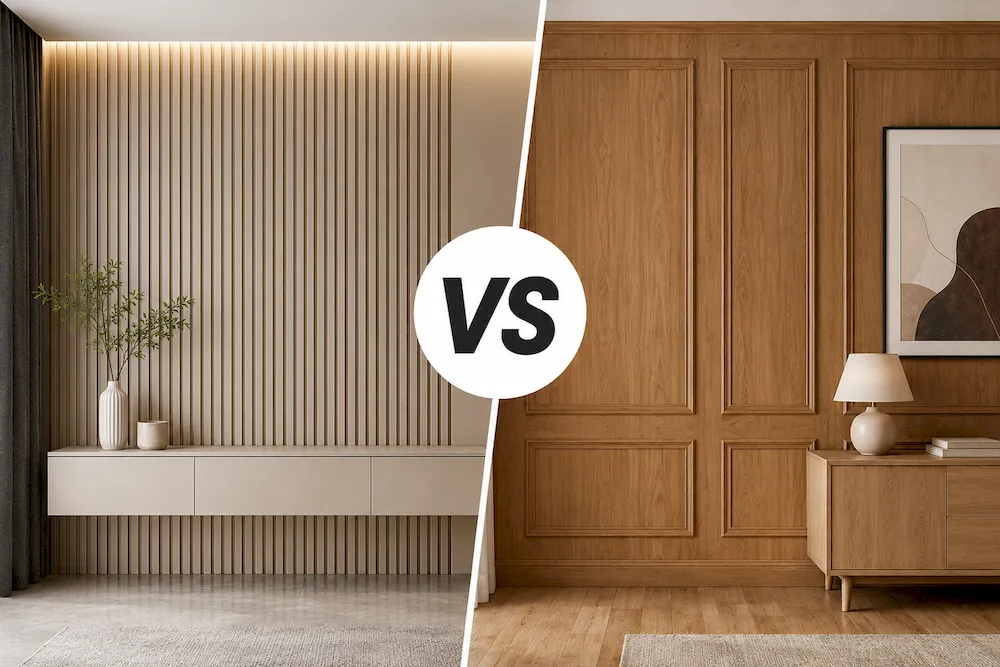
WPC Wall Panels vs Traditional Wood Panels: Which Is Better for Interior Decoration

“`html

Wall panels are used to cover walls and change the look of an interior space. Two common choices are WPC wall panels and traditional wood panels. Both can be used in homes, hotels, offices, shops, restaurants, and other buildings.

WPC means wood plastic composite. WPC wall panels are made from wood powder, plastic, and other materials. Traditional wood panels are made from natural wood, plywood, MDF, or wood veneer.

These two types of wall panels have differences in material, installation, cleaning, maintenance, cost, and use. This guide compares WPC wall panels with traditional wood panels to help buyers choose a material for an interior decoration project.

What Are WPC Wall Panels?

WPC wall panels are made by mixing wood powder with plastic material. The mixture is heated and passed through a mould. The mould forms the panel into a fixed shape.

After production, the panel may receive a surface film, printed layer, coating, or wood grain pattern. WPC wall panels are available in flat, slatted, fluted, curved, and wave profiles.

Many WPC wall panels use an interlocking edge. One panel connects with the next panel during installation. The panels may be fixed with glue, nails, screws, or clips.

What Are Traditional Wood Panels?

Traditional wood panels are made from wood or wood-based boards. They may use solid wood, plywood, MDF, veneer, or other wood products.

Wood panels can be cut into boards, strips, slats, or other shapes. The surface may be painted, stained, polished, laminated, or covered with veneer.

Some wood panels are supplied with a finished surface. Other panels need surface work after installation, such as sanding, painting, or sealing.

Material Comparison

WPC Wall Panel Material

WPC panels contain wood powder and plastic. The amount and type of each material can differ between suppliers and product lines.

The panel structure is formed by extrusion. This process allows the factory to produce the same profile in large quantities.

Traditional Wood Panel Material

Traditional wood panels use natural wood or wood-based materials. The grain, color, and surface can vary from one board to another.

Solid wood comes from trees. Plywood is made from layers of wood veneer. MDF is made from wood fibers and resin. Veneer panels use a thin layer of wood on another base material.

Appearance and Design Options

WPC Wall Panels

WPC wall panels can copy the look of wood through surface film or printing. Buyers can choose from different colors, grain patterns, and profiles.

Common WPC wall panel designs include:

  • Vertical slat panels
  • Fluted panels
  • Flat panels
  • Wave panels
  • Half-covered panels
  • Wood grain panels

Because the surface is made during production, panels from the same production batch can have the same pattern and color.

Traditional Wood Panels

Wood panels show wood grain from the material itself or from a veneer layer. Each wood board may have a different grain pattern.

Wood panels can also be painted or stained. The final result depends on the wood type, surface process, installation work, and coating.

Installation Comparison

Installing WPC Wall Panels

WPC wall panels can often be cut and installed on site. Many types use an interlocking structure, which helps connect one panel to another.

Installation may require:

  • Measuring tape
  • Saw
  • Glue
  • Nail gun
  • Screws
  • Clips
  • Corner trims

Some WPC panels can be installed directly on a wall. Others may need wooden battens or a metal frame.

Installing Traditional Wood Panels

Wood panel installation may require cutting, sanding, drilling, fixing, filling, staining, painting, or sealing.

The process depends on whether the product is solid wood, plywood, MDF, or veneer. Some wood panels need more surface work after installation.

Wood can also change size when room moisture changes. Installers may need to leave expansion gaps between panels.

Cleaning and Maintenance

WPC Wall Panels

WPC wall panels can usually be cleaned with a cloth. Dust and marks can often be removed with water or a cleaning product.

The surface does not usually need painting or sealing after installation. If one panel is damaged, it may be possible to remove and replace that panel.

Traditional Wood Panels

Wood panels may need surface care over time. Painted wood may need new paint. Stained wood may need another coating. Scratches may require sanding or repair.

Water should not remain on many wood surfaces for a long time. Moisture can cause swelling, bending, stains, or surface damage.

Moisture and Water

WPC wall panels contain plastic, so they do not react to moisture in the same way as many wood products. However, buyers should still confirm whether a product is suitable for the planned area.

Traditional wood panels can absorb moisture. Solid wood, MDF, and plywood may change when exposed to water or room moisture.

For kitchens, bathrooms, shops, and other areas where wall cleaning is common, buyers should check the water resistance of the selected product before ordering.

Fire and Building Requirements

WPC wall panels and traditional wood panels can have different fire performance. The result depends on the material, formula, coating, thickness, and production process.

Public buildings, hotels, schools, offices, and shopping malls may have rules for wall materials. Buyers should request test reports and check local building requirements.

A product should not be selected only because it is called WPC or wood. The test result for the exact product should be checked.

Cost Comparison

Product Cost

The product price depends on the material, size, thickness, surface, order quantity, and supplier.

Solid wood panels may cost more than some WPC panels. MDF or plywood panels may cost less, but they may need paint, veneer, or other surface work.

Installation Cost

WPC wall panels may reduce some installation steps because the surface is already finished. Interlocking edges can also help with panel connection.

Traditional wood panels may need sanding, painting, staining, sealing, or filling after installation. These steps can add labor and material costs.

Maintenance Cost

Buyers should also consider future cleaning and repair. A lower purchase price does not always mean a lower project cost.

The total cost may include:

  • Panel price
  • Shipping cost
  • Accessories
  • Installation labor
  • Surface treatment
  • Cleaning
  • Repair
  • Replacement

Applications of WPC and Wood Panels

WPC Wall Panel Applications

WPC wall panels are often used in:

  • Living rooms
  • Bedrooms
  • Hotel rooms
  • Office reception areas
  • Meeting rooms
  • Restaurants
  • Shops
  • Exhibition spaces

They are often used behind televisions, beds, reception desks, company signs, and display areas.

Traditional Wood Panel Applications

Traditional wood panels are used in homes, hotels, offices, libraries, restaurants, meeting rooms, and furniture areas.

Wood panels may be selected when the project requires natural wood grain or a specific wood material.

Which Material Is Better?

There is no single answer for every project. The choice depends on the wall location, budget, installation method, surface requirement, cleaning plan, and building rules.

Choose WPC Wall Panels When:

  • The project needs a finished surface
  • The buyer wants an interlocking panel system
  • The wall needs regular cleaning
  • The project needs the same color across many panels
  • The buyer wants to reduce painting work
  • The project uses fluted or slatted wall profiles

Choose Traditional Wood Panels When:

  • The project requires natural wood
  • The wood grain must come from the material
  • The panel will be stained or painted on site
  • The design requires a type of solid wood or veneer
  • The project allows regular surface maintenance

What Buyers Should Check Before Ordering

Before buying WPC or traditional wood panels, check the following points:

  • Panel material
  • Panel size
  • Thickness
  • Wall coverage width
  • Surface type
  • Color code
  • Installation method
  • Required accessories
  • Fire test reports
  • Packaging method
  • Minimum order quantity
  • Production time

Buyers should request samples before placing a project order. Samples help check the surface, profile, color, joining method, and cutting process.

Conclusion

WPC wall panels and traditional wood panels can both be used for interior wall decoration. WPC panels are made from wood powder and plastic, while traditional panels use natural wood or wood-based boards.

WPC panels often require fewer surface steps and can be cleaned with a cloth. Traditional wood panels provide wood grain from wood or veneer but may need more surface care.

The right choice depends on the project. Buyers should compare material, installation, cleaning, cost, test reports, and local building rules before placing an order.

“`

Request a Quote